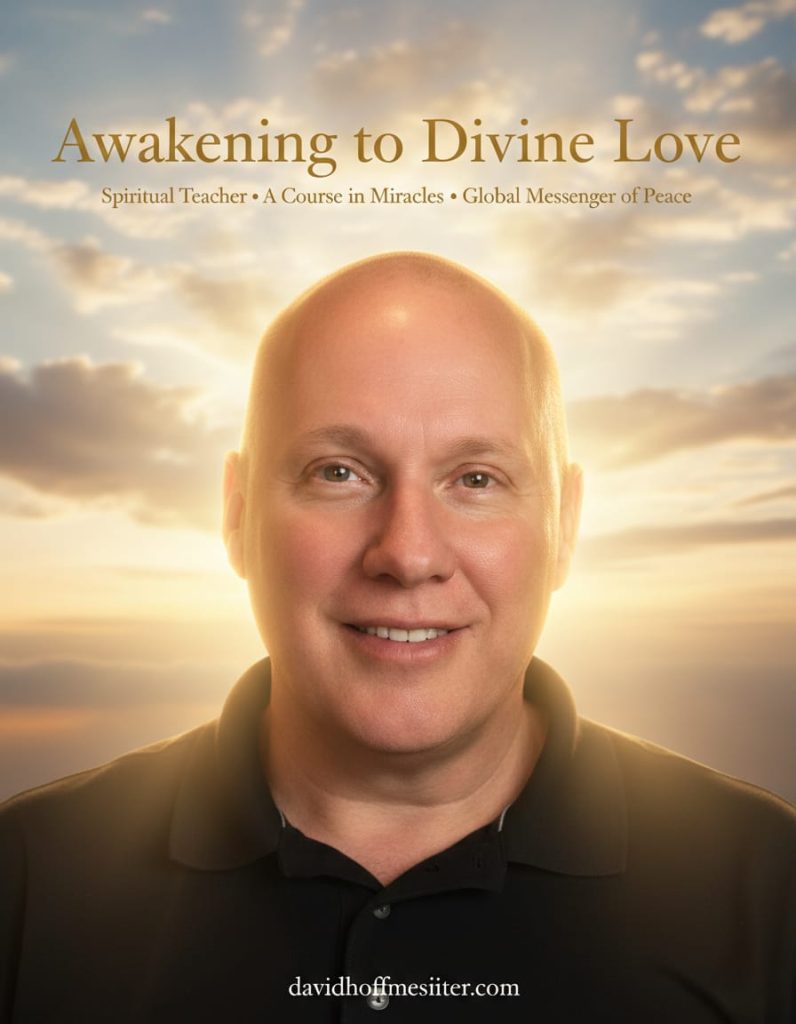
When individuals search for david hoffmeister wikipedia, they often expect a structured overview—birthplace, spiritual influences, publications, and affiliations. While such summaries provide a factual scaffold, they rarely illuminate the depth of lived practice that defines the life and teachings of David Hoffmeister.
To truly understand about david hoffmeister, one must explore the philosophical architecture underlying his teachings, the psychological implications of his message, and the disciplined consistency with which he applies spiritual principles.
The Foundational Shift: From Intellectual Curiosity to Devotional Practice
David Hoffmeister’s spiritual journey did not begin as a public mission. It began as personal inquiry. In the mid-1980s, after encountering A Course in Miracles (ACIM), he recognized the text not as abstract theology but as a structured system for mind training.
Unlike casual readers, he adopted the Workbook lessons as a daily operational discipline. The Course proposes that perception—rather than circumstance—generates emotional experience. Therefore, the correction of perception becomes the path to peace.
This premise reoriented his entire life. Instead of seeking fulfillment through career or status, he prioritized inner alignment.
Understanding the Concept of Mind Training
Central to understanding about david hoffmeister is the idea of mind training. In ACIM terminology, the mind has become conditioned to interpret events through fear, defense, and separation.
Mind training involves:
- Observing thoughts without immediate identification
- Questioning habitual interpretations
- Choosing forgiveness over judgment
- Releasing attachment to outcome
This approach resembles cognitive restructuring but extends beyond psychological adjustment into metaphysical realignment.
Hoffmeister teaches that consistent practice gradually dissolves the belief in separation—the root of perceived conflict.
Forgiveness as Perceptual Correction
A common misunderstanding equates forgiveness with moral pardon. However, in the framework Hoffmeister teaches, forgiveness is epistemological—it corrects how reality is perceived.
When someone feels attacked, betrayed, or diminished, the ego reinforces identity through defense. Forgiveness interrupts this mechanism by asking: What belief is being protected?
This inquiry shifts responsibility inward. Emotional disturbance becomes an indicator of misperception rather than external injustice.
Such reframing fosters emotional resilience.
The Ego and Identity Structure
Another essential dimension about david hoffmeister is his analysis of ego identity. The ego, in ACIM philosophy, is a thought system built on comparison and survival.
It thrives on:
- Personal narratives
- Grievances
- Competition
- Self-importance
Hoffmeister emphasizes that awakening involves recognizing the ego’s strategies rather than suppressing them. Awareness weakens identification.
Through sustained vigilance, individuals begin to experience peace independent of narrative identity.
Radical Surrender and Guidance
A defining feature of Hoffmeister’s life is his commitment to divine guidance. Over time, he released conventional life planning structures. Career ambition, financial forecasting, and long-term personal agendas were replaced with attentive listening.
Guidance, in his explanation, emerges as calm clarity rather than emotional impulse.
This posture of surrender often challenges cultural norms that equate control with security. Yet Hoffmeister asserts that attachment to control generates anxiety.
Trusting guidance cultivates internal stability even amid external unpredictability.
Teaching Approach: Dialogue Over Doctrine
David Hoffmeister’s teaching style is interactive rather than authoritarian. During retreats and online sessions, participants are encouraged to present real-life dilemmas.
Rather than offering prescriptive answers, he redirects attention:
- What expectation created this upset?
- What belief about self is threatened?
- What outcome is being demanded?
This methodology reinforces personal accountability and empowers students to apply principles independently.
Community and Shared Practice
An integral part of understanding about david hoffmeister involves examining his association with spiritual communities committed to ACIM principles.
These communities emphasize:
- Transparent communication
- Shared decision-making
- Financial and practical collaboration
- Continuous forgiveness practice
Living in community accelerates growth because interpersonal dynamics surface hidden beliefs quickly.
Conflict becomes curriculum rather than obstacle.
Addressing Skepticism
Public spiritual teachers inevitably encounter skepticism. Critics may question metaphysical claims or the feasibility of surrendering traditional life planning.
Hoffmeister typically responds pragmatically: test the principles. If forgiveness reduces suffering and enhances peace, its practical validity becomes self-evident.
This emphasis on direct experience over theoretical persuasion distinguishes his approach.
Global Reach Through Technology
Digital platforms have amplified his teachings worldwide. Online retreats, video archives, and live-streamed sessions provide accessibility across geographic boundaries.
This integration of timeless spiritual principles with contemporary technology ensures continuity and global engagement.
The message remains consistent regardless of medium: perception correction is the path to peace.
Psychological and Philosophical Context
Hoffmeister’s teachings intersect with several intellectual traditions:
- Phenomenology – Experience shaped by perception
- Existentialism – Identity inquiry
- Non-duality – Unity beyond separation
- Contemplative psychology – Observing thought patterns
Yet he frames these intersections within the specific metaphysical structure of ACIM, emphasizing divine love as the corrective principle.
Practical Implementation Strategy
For those researching david hoffmeister wikipedia, curiosity often leads to practical exploration. Individuals seeking deeper understanding about david hoffmeister may adopt a structured approach:
- Commit to daily Workbook practice.
- Track emotional triggers.
- Pause before reacting.
- Question interpretative assumptions.
- Consciously choose forgiveness.
Consistency transforms theory into lived experience.
Cultural Relevance in Modern Society
Contemporary society emphasizes productivity, identity construction, and competitive achievement. These values frequently generate stress and comparison-driven dissatisfaction.
Hoffmeister’s message proposes an alternative orientation:
- Peace over performance
- Cooperation over competition
- Listening over asserting
- Trust over control
Such principles address underlying anxiety rather than surface symptoms.
Longevity and Stability of Message
A distinguishing characteristic about david hoffmeister is message continuity. Over decades, his central emphasis has remained stable: forgiveness, guidance, surrender, and peace.
This consistency contributes to long-term credibility.
Conclusion
Searching david hoffmeister wikipedia offers structural biography. Exploring deeply about david hoffmeister reveals disciplined application of mind training, ego deconstruction, and radical trust.
His life demonstrates that spiritual awakening is neither dramatic spectacle nor intellectual abstraction. It is sustained commitment to perception correction.
For seekers prepared to practice rather than merely analyze, his path offers a replicable methodology—grounded in forgiveness, stabilized by guidance, and sustained through daily discipline.