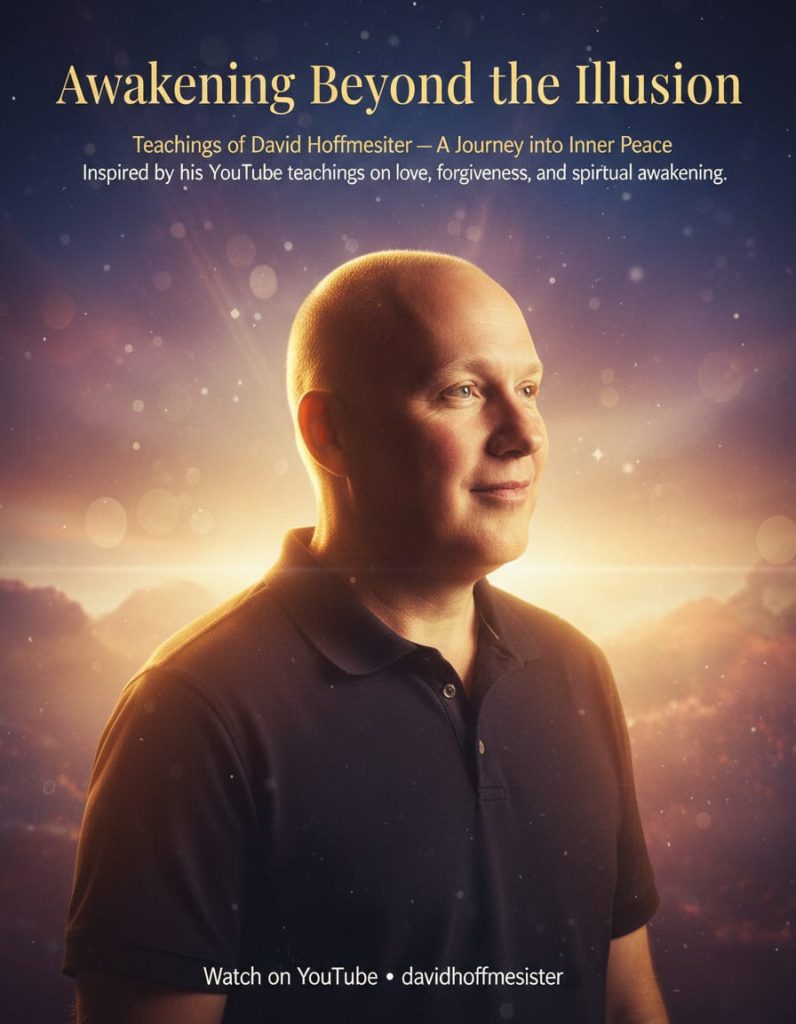
David Hoffmeister Wikipedia highlights the life and teachings of a modern spiritual teacher known for his deep commitment to forgiveness, inner awareness, and present-moment living. His approach is rooted in practical spiritual application, helping individuals shift from fear-based perception to clarity, peace, and authentic inner freedom.
Introduction
In an age dominated by constant stimulation, digital overload, and emotional pressure, people increasingly search for clarity and stability. Many turn to spiritual philosophy not as an escape, but as a structured path toward psychological balance and self-realization. David Hoffmeister’s teachings address this need directly by focusing on internal transformation rather than external change.
His message is simple yet profound: peace is not something to acquire; it is something to uncover. Through disciplined awareness, forgiveness practice, and conscious perception, individuals can experience a fundamental shift in how they interpret life events. This shift reduces emotional turbulence and enhances mental resilience.
Unlike abstract spiritual concepts that remain theoretical, Hoffmeister emphasizes daily integration. His teachings are designed to be lived — not merely understood intellectually.
Foundations of His Philosophy
David Hoffmeister’s spiritual framework is heavily influenced by A Course in Miracles, which centers on perception correction and forgiveness. However, his communication style makes these ideas accessible to modern audiences.
The foundation of his philosophy includes three core ideas:
- Perception Determines Experience
External events do not create suffering; interpretation does. When perception shifts, emotional experience shifts. - Forgiveness Is Psychological Release
Forgiveness is not about condoning behavior; it is about releasing mental attachment to grievance. This restores clarity and emotional neutrality. - The Present Moment Is the Only Reality
Anxiety is future-oriented. Regret is past-oriented. Peace exists only in the present moment.
These principles create a structured pathway toward mental freedom.
Awareness as a Daily Discipline
Hoffmeister teaches that awareness is not passive observation — it is active consciousness. Becoming aware of thoughts without identifying with them allows a person to detach from emotional reactivity.
For example:
- Instead of reacting to criticism with anger, one observes the emotional trigger.
- Instead of fearing uncertainty, one acknowledges the fear without reinforcing it.
This creates psychological space. Over time, that space becomes inner stability.
The discipline of awareness includes:
- Daily quiet reflection
- Observing recurring thought patterns
- Questioning automatic assumptions
- Pausing before reacting
When practiced consistently, awareness weakens ego-driven responses and strengthens clarity.
Forgiveness as Mental Recalibration
One of the most misunderstood aspects of spiritual growth is forgiveness. Hoffmeister reframes forgiveness as perception correction rather than moral superiority.
Forgiveness means:
- Releasing the belief that someone else controls your emotional state
- Accepting responsibility for your interpretation
- Choosing peace over grievance
This approach eliminates victim mentality and restores personal empowerment. It is not passive acceptance — it is conscious release.
Through repeated practice, forgiveness becomes automatic. Emotional triggers lose intensity. Conflict transforms into learning.
Emotional Transformation Through Practice
Consistent engagement with these principles leads to measurable emotional changes:
- Reduced anxiety
- Greater emotional regulation
- Increased patience
- Improved communication
- Stronger interpersonal relationships
These outcomes are not mystical — they are psychological consequences of altered perception. When the mind stops resisting reality, stress naturally decreases.
The transformation process is gradual. It requires consistency, not intensity. Small daily applications accumulate into lasting change.
The Role of Digital Access
Modern seekers benefit from online accessibility. Teachings that once required physical attendance at retreats are now available through digital platforms.
This accessibility allows individuals to:
- Study at their own pace
- Revisit teachings repeatedly
- Integrate learning into busy schedules
- Connect with global communities
The structured availability of spiritual content strengthens retention and practical application.
Overcoming Common Obstacles
Spiritual growth is not free from resistance. Common challenges include:
- Doubt about progress
- Frustration with recurring emotional patterns
- Attachment to outcomes
- Intellectual overanalysis
Hoffmeister emphasizes simplicity: return to awareness. Return to forgiveness. Return to the present moment.
Complication is often the ego’s strategy to avoid surrender. Simplicity restores clarity.
Psychological Impact of Present-Moment Living
Living in the present is not a cliché concept — it is a cognitive shift.
When attention remains anchored in the present:
- Stress hormones decrease
- Decision-making improves
- Emotional regulation strengthens
- Focus increases
Present-moment awareness eliminates unnecessary mental projections. Instead of imagining worst-case scenarios, individuals respond to actual circumstances.
This reduces exaggerated emotional reactions and fosters grounded stability.
Long-Term Personal Development
Over time, practitioners often notice:
- Greater consistency in mood
- Decreased emotional volatility
- Increased trust in intuition
- Enhanced ability to navigate uncertainty
Spiritual growth becomes less about dramatic experiences and more about quiet stability. Peace becomes baseline rather than temporary relief.
Hoffmeister’s teachings encourage long-term integration rather than short-term inspiration.
Conclusion
The teachings highlighted through David Hoffmeister Wikipedia present a structured pathway toward emotional clarity and spiritual maturity. By applying awareness, forgiveness, and present-moment living consistently, individuals can recalibrate perception and experience sustainable inner peace.
Spiritual awakening, in this framework, is not an abstract event — it is a disciplined shift in perception repeated daily until clarity becomes natural.
Frequently Asked Questions (FAQ)
Who is David Hoffmeister?
David Hoffmeister is a spiritual teacher known for applying principles of forgiveness, awareness, and perception correction inspired by A Course in Miracles.
What is the main focus of his teachings?
His teachings focus on shifting perception from fear to clarity through awareness and forgiveness.
Is this approach psychological or spiritual?
It integrates both. The principles create psychological stability while supporting spiritual awakening.
Do beginners need prior knowledge?
No. His teachings are accessible to individuals at any stage of spiritual exploration.
How long does transformation take?
Progress varies by individual, but consistent daily practice produces gradual and sustainable change.